

If you’ve been taking probiotics but still feel bloated, inflamed, or just off, you’re not alone. Millions of people take probiotics daily with little to no improvement.
And the reason is simple:
Your good gut bacteria is starving — and probiotics alone aren’t the food they need.
Probiotics Are the Bacteria — Prebiotics Are the Food
Probiotics are the good bacteria that support digestion, immunity, inflammation, and even mood.
But most probiotic supplements:
- Don’t survive stomach acid
- Don’t colonise the gut
- Don’t have the fuel they need to grow
Imagine throwing seeds onto dry soil.
It doesn’t matter how many you plant — nothing grows.
That’s exactly what happens when you take probiotics without prebiotics.
Prebiotics are fibres and compounds your body can’t digest, but your gut bacteria can.
They help your good bacteria multiply, strengthen, and rebalance your microbiome.
The Hidden Gut Disruptor: Ultra‑Processed Foods (UPF)
UPF quietly damages your gut every day.
They can:
- Feed harmful bacteria
- Starve your good bacteria
- Damage the gut lining
- Trigger inflammation
Think: packaged snacks, sugary cereals, protein bars with 20+ ingredients, soft drinks, fast food, artificial sweeteners, and anything with gums or emulsifiers.
Your gut bacteria are living organisms.
They respond to what you feed them — every single day.
Is Honey the Best Whole‑Food Prebiotic? Research Says Yes
Many foods contain prebiotics (like garlic, onions, leeks, bananas)…
but KOORA raw bioactive honey is in a category of its own.
Here’s why KOORA honey stands out:
1. KOORA Honey contains natural prebiotic oligosaccharides
These compounds feed beneficial bacteria like Lactobacillus and Bifidobacteria.
2. KOORA Honey reduces harmful bacteria at the same time
Honey’s antimicrobial activity helps reduce pathogens like E. coli and Salmonella — while still feeding the good bacteria.
3. KOORA Honey is gentle for sensitive digestion
Many prebiotic foods are high‑FODMAP, meaning they ferment quickly in the gut and can cause bloating.
What Is FODMAP?
FODMAPs are short‑chain carbohydrates that ferment quickly in the gut — often causing bloating or discomfort.
Foods like garlic, onions, leeks, and artichokes are incredible prebiotics…
but they’re also high‑FODMAP.
Why honey is different
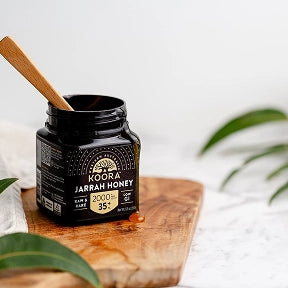
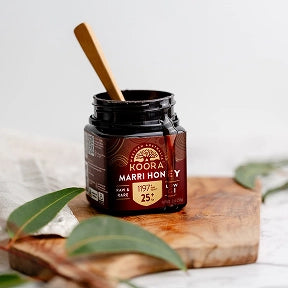
Low‑GI varieties like Jarrah TA35+ and Marri TA25+ are:
- Gentle
- Soothing
- Easy to digest
- Naturally prebiotic
The Simple Morning Ritual That Works
Warm water (40°C/104°F) + 1 tsp raw, bioactive honey
Sip slowly on an empty stomach.
This supports:
- Digestion
- Microbial balance
- Inflammation reduction
- Gut lining health
KOORA’s Jarrah TA35+ and Marri TA25+ honeys are naturally rich in prebiotic compounds, antioxidants and help increase butyric acid levels — which is why many people feel calmer, lighter, and more balanced when they start their day with it.
A More Natural Way to Support Your Gut
Raw, bioactive honey offers a rare combination of prebiotic nourishment, antimicrobial activity, antioxidants, a low glycemic index, and gentle digestive support. It’s one of the few whole foods that can feed beneficial bacteria while simultaneously helping reduce harmful strains.
When paired with a simple morning ritual, it becomes a natural way to support microbial diversity, inflammation, and gut lining health.
Your gut isn’t broken — it simply responds to what you feed it.
Nourish it well, and it will take care of you.