

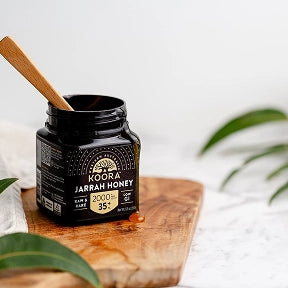

The Truth About Low GI Honey: How KOORA Jarrah & Marri Support Daily Wellness
The Sweet Truth About Honey and Blood Sugar
Honey is often positioned as a “natural sugar,” leading many people to assume all honeys affect the body in the same way. In reality, their impact on blood sugar, energy levels, and overall wellbeing can differ significantly depending on their composition.
One of the most important factors behind these differences is the Glycemic Index (GI), a scientific measure of how quickly a food raises blood glucose. While many commercial honeys sit in the medium-to-high GI range, certain rare honeys — including Jarrah and Marri from Western Australia — are widely recognised for producing a gentler glycemic response. This distinction plays a meaningful role in how honey supports daily energy and wellness.
What is the Glycemic Index (GI)
How GI Measures Sugar Absorption
The glycemic index ranks carbohydrate-containing foods on a scale from 0 to 100 based on how rapidly they raise blood glucose after consumption. Foods with a lower GI are absorbed more slowly, resulting in a steadier release of energy and a smoother metabolic response.

High GI Foods and Energy Spikes
High-GI foods are digested quickly, triggering a rapid rise in blood sugar followed by a sharp drop. This pattern is commonly associated with short-lived energy, increased hunger, and sugar cravings — particularly when these foods are consumed regularly.
Why GI Matters for Daily Wellness and Long-Term Health
Choosing lower-GI foods can help support:
- Steadier energy throughout the day
- Improved metabolic balance
- Better appetite regulation
- More consistent energy and hormone rhythms
For many people, GI is a practical indicator of how a food will feel in the body beyond initial sweetness
Most Honeys Are High GI (and Why That’s a Problem)
Typical GI Range of Common Honeys (60–65)
Most supermarket honeys fall between GI 60–65, placing them in the medium-to-high GI category. Although naturally derived, these honeys can behave similarly to refined sugars once metabolised.
Quick Sugar Spikes and Energy Crashes
High-GI honeys tend to provide fast-acting energy that burns quickly. This often leads to noticeable peaks and crashes, contributing to fatigue, irritability, and inconsistent energy levels across the day.
Impact on Blood Sugar Management
Repeated blood sugar fluctuations can undermine daily wellbeing, particularly for individuals who prioritise energy stability, digestive comfort, or metabolic balance.
KOORA Honey: Naturally Low GI and Science-Backed

Jarrah and Marri Honeys' Unique Composition
Jarrah and Marri honeys are from the unique flowering trees of Western Australia’s ancient forests. They naturally contain a distinctive carbohydrate profile, including lower glucose levels, alongside a rich concentration of bioactive compounds.
This composition is widely understood to slow sugar absorption — a natural benefit created by the environment and floral source rather than processing methods
GI Around the Low Range — What That Means for You
Jarrah and Marri honeys are often recognised among honey researchers and producers for having a lower glycemic impact compared to most commercial honeys. A lower-GI response generally supports :
- Slower rises in blood glucose
- Reduced insulin spikes
- More sustained energy release
These characteristics make low-GI honeys a healthier option for everyday use.
Sustained Energy, No Sugar Crashes
Rather than acting as fast-burn fuel, KOORA’s Jarrah and Marri honeys offer a steadier source of sweetness. This supports smoother energy throughout the day without the disruptive highs and lows associated with other higher-GI honeys.
Ideal for Active Lifestyles, Focus, and Daily Rituals
Thanks to their balanced energy release and high-activity properties, KOORA honeys suit:
- Active individuals seeking consistent daily energy
- Students and professionals
- Shift workers
-
Anyone watching their blood sugar levels
The Wellness Benefits of KOORA’s Low GI Profile
Balanced Energy for Workouts and Recovery
Consumed before or after physical activity, KOORA honey provides sustained carbohydrate support while delivering naturally occurring antioxidants and high antimicrobial activity that contribute to recovery and resilience.
Gentle on Digestion & Prebiotic Support
Jarrah and Marri honeys naturally contain prebiotic compounds that help nourish beneficial gut bacteria. Combined with a gentler glycemic response, this supports digestive comfort, microbiome balance, and overall gut wellbeing.
A Gentler Choice for Blood Sugar Awareness
While all sweeteners should be enjoyed mindfully, honeys with a lower glycemic impact may offer a more stable metabolic response compared to standard honey, making them a healthier choice for those paying closer attention to blood sugar balance.
How to Use KOORA Honey in Your Daily Rituals

Morning Boost
Add to yogurt, oats, smoothies, or cooled herbal teas to support steady morning energy while preserving its raw qualities.
Pre-Workout Fuel
A spoonful before exercise provides sustained energy without the sharp spike associated with higher-GI sugars.
Post-Workout Recovery
Stir into protein shakes or spoon over fruit and yogurt to help replenish energy stores and support recovery.
Evening Ritual
KOORA honey’s slow-release profile makes it suitable for a calming evening spoonful — gentle enough to support rest without overstimulation.
Conclusion: Taste the KOORA Difference
Most honeys offer sweetness. KOORA offers balance AND sweetness.
Harvested from the ancient Jarrah and Marri forests of Western Australia and tested to rigorous standards, KOORA honey delivers high antimicrobial total activity (TA) and antioxidant-rich nourishment with a gentler glycemic response — supporting everyday rituals for steady energy, digestive health and natural wellness,
Make KOORA part of your daily routine: sweet, steady, science-backed and grounded in nature’s goodness.